What Is a Japanese Head Spa? A First-Timer's Guide
If you've seen the term "head spa" showing up on your feed and aren't sure what it actually involves, you're not alone. It's one of the most-searched beauty terms of the year, and most of what's out there is a fifteen-second clip with no context. Here's the plain version.
It starts with a scalp analysis, not a shampoo
Before any water touches your head, a camera looks at your scalp up close. You see it on a screen in real time — buildup at the root, dry patches, oil concentration. This isn't a gimmick; it's how your therapist decides which products to use on you specifically, instead of running the same routine on everyone.
The washing itself is slower than anything you've had at a salon
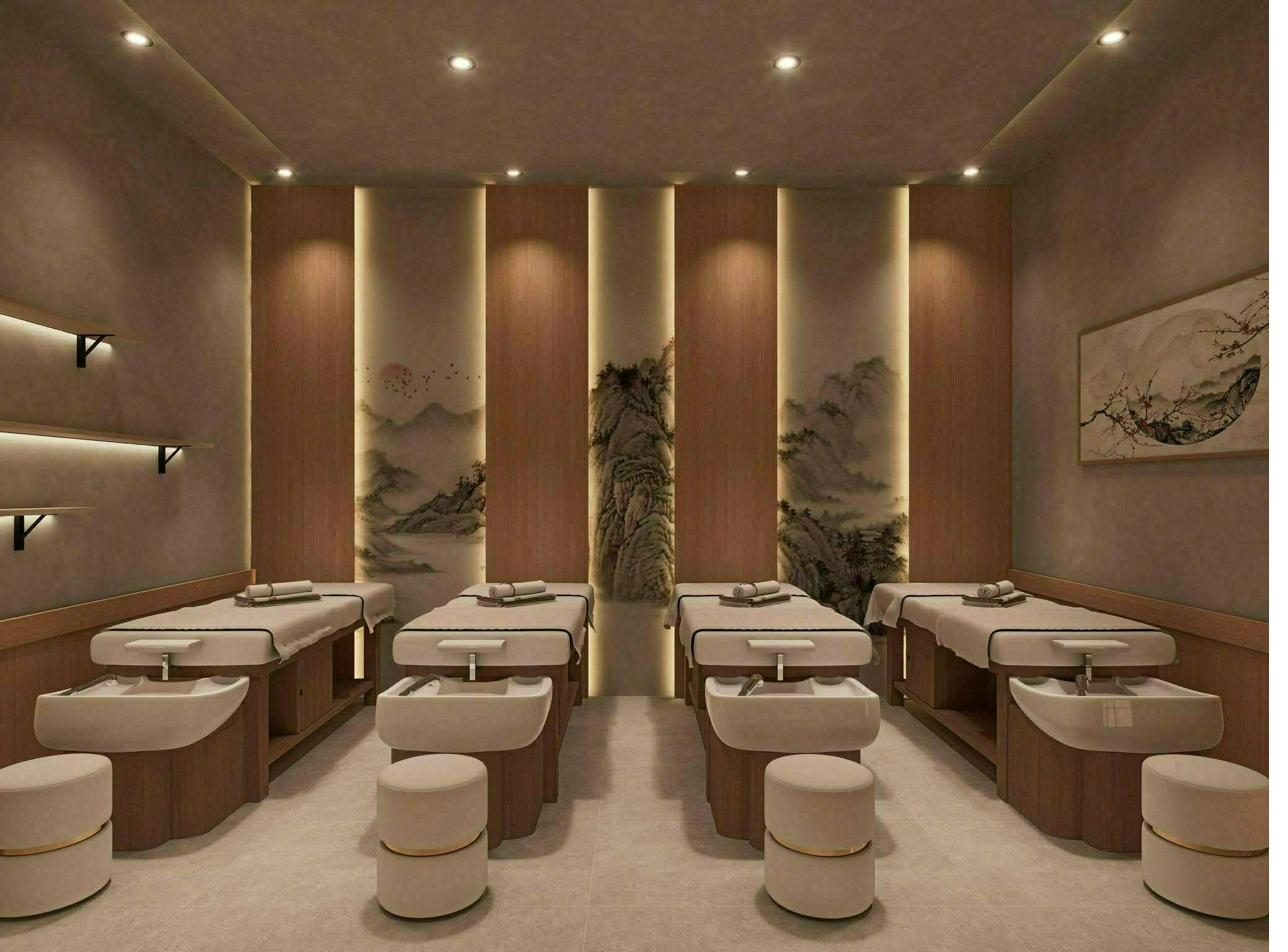
A traditional shampoo at a hair salon takes two or three minutes and exists to get your hair clean before a cut. A head spa ritual runs 60 to 120 minutes and the goal is different: release the tension that sits in your scalp, neck, and shoulders. You lie back on a reclined bed, not a sink, and warm water falls from a ring positioned above you rather than being poured from a handheld sprayer. At Lumé, that ring is copper, and the water pressure is deliberately gentle — more like standing under warm rain than being rinsed.
Exfoliation is part of it
Your scalp is skin, and skin holds onto buildup the same way your face does — product residue, dead skin cells, oil. A head spa includes scalp exfoliation, usually with a soft brush or fingertip technique, to lift that buildup before the massage portion begins. Most people are surprised by how much comes up on the first visit.
Then the massage, and this is where people fall asleep
The final portion targets your scalp, neck, and shoulders with slow, deliberate pressure. Circulation increases, and for most guests, this is the part that turns a "treatment" into something closer to a nap you didn't plan on taking. It's not uncommon for guests to doze off entirely, especially in the longer rituals.
Do you need to wash your hair after?
No. Your hair is already clean, styled, and usually blown dry or wrapped before you leave, depending on which ritual you booked.
How is this different from a facial?
Same category of idea, different location on your body. A facial treats the skin on your face; a head spa treats the skin on your scalp. Both involve analysis, cleansing, exfoliation, and a treatment step suited to what's actually happening on your skin that day.
What it's not
It's not a medical treatment and it's not marketed as one. It won't cure anything. What it does is give your scalp the kind of attention your face already gets, and give you an hour where nothing is expected of you.
Trying it for the first time
If you're near Mableton, Lumé's head spa menu starts with a shorter Scalp Recharge ritual if you want to test the format before committing to a longer one. Every ritual includes the scalp analysis, and if you're already booked for nails, you can combine both in one visit.